


Things are heating up in Silicon Valley, where the race to build the best artificial intelligence has just taken a dramatic turn. OpenAI CEO Sam Altman reportedly sent a serious internal memo to his employees this week, declaring a “code red.” For the past few years, ChatGPT has been the undisputed leader in the AI world, but that position is now under threat. The sudden alarm comes after Google released its new Gemini 3 model in mid-November, which has quickly impressed users and industry experts alike, forcing OpenAI to rethink its immediate plans.

The reason for this urgency is clear when looking at the recent feedback from tech leaders. Marc Benioff, the CEO of Salesforce, made headlines recently when he announced he was switching to Gemini 3 after using ChatGPT daily for three years. He described Google’s new model as a massive leap forward, calling its speed and reasoning capabilities “insane.” It isn’t just one person’s opinion, as the numbers tell a similar story. While ChatGPT remains massive with roughly 800 million weekly users, Google is catching up fast. The Gemini app grew from 450 million monthly active users in July to 650 million by October, proving that the competition is getting fierce.
In response to this pressure, Altman’s “code red” directive involves shifting the company’s priorities. According to reports, OpenAI is pausing some of its newer initiatives, such as plans to put advertisements inside ChatGPT, building AI shopping agents, and launching a personal assistant feature called Pulse. Instead, the company is redirecting all its energy toward improving how ChatGPT handles day-to-day conversations. The goal is to make the chatbot faster, more reliable, and better at answering a wider range of questions to ensure it stays ahead of Google’s new technology.
“Our focus now is to keep making ChatGPT more capable, continue growing, and expand access around the world — while making it feel even more intuitive and personal.” – ChatGPT Head Nick Turley
This battle is about more than just popularity; the financial stakes are enormous. OpenAI is now valued at a staggering $500 billion, but unlike Google, it does not have a massive search engine advertising business to pay the bills. Google can use its billions in ad revenue to fund its AI research, whereas OpenAI relies on investors to cover the immense costs of running its systems—costs that are expected to reach over $1 trillion for cloud computing and chips in the coming years. This makes keeping their users happy absolutely critical for their survival.
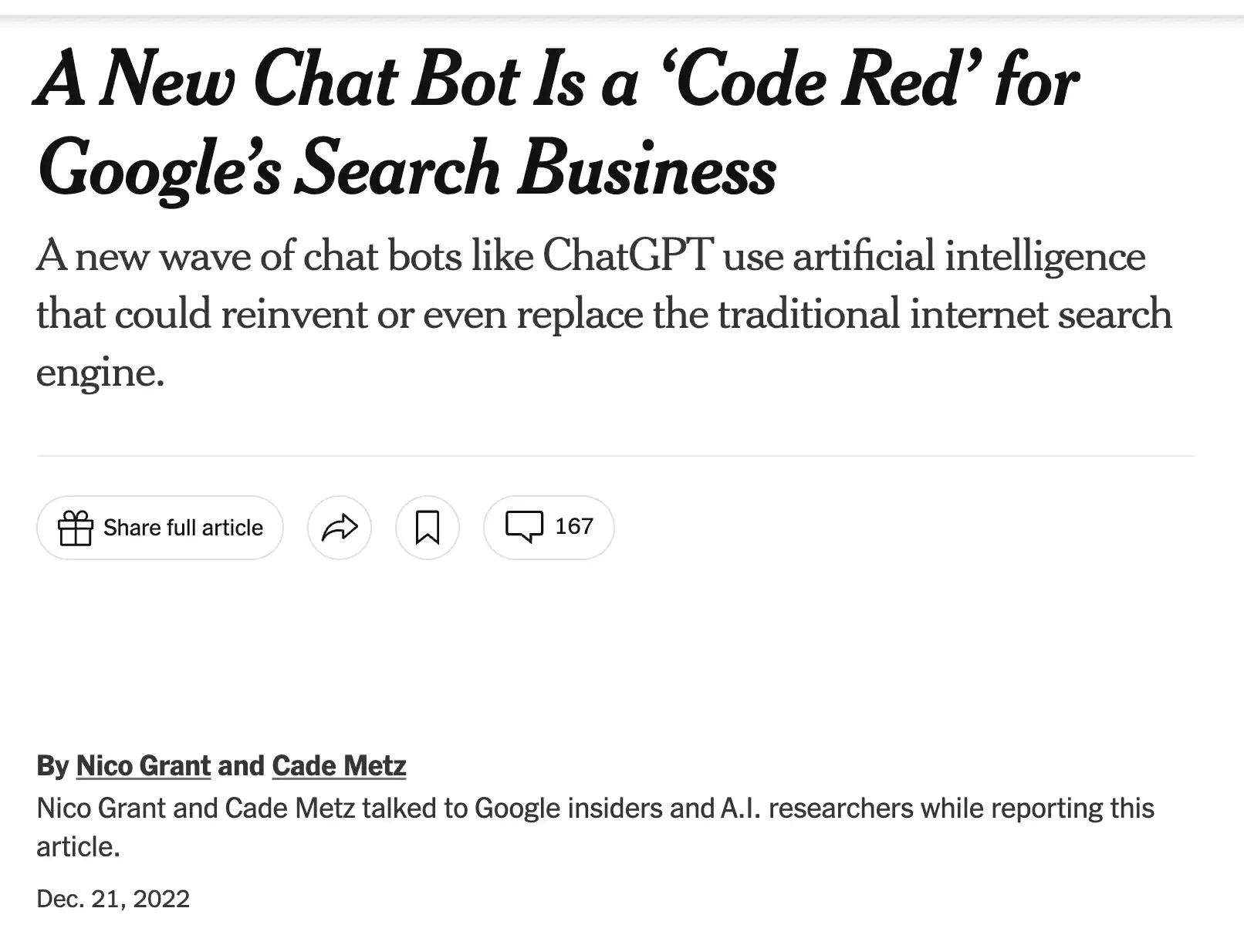
The situation creates an interesting symmetry in the history of the tech industry. Back in December 2022, it was Google management that declared a “code red” when ChatGPT first launched and shocked the world. At that time, Google scrambled to catch up to the startup. Now, three years later, the tables have turned. With Google’s Gemini 3 seemingly taking the lead in performance, it is OpenAI that finds itself scrambling to defend its throne, proving that in the world of technology, no advantage lasts forever without constant innovation.